The Saluda Grade railroad corridor, which runs through upstate South Carolina and southwestern North Carolina, has been railbanked for a planned recreational trail. On December 19, 2024, the Surface Transportation Board issued a Notice of Interim Trail Use for the corridor. The planned Saluda Grade Rail Trail will span 31.3 miles from Inman, South Carolina, to Zirconia, North Carolina.
For landowners along the route, the project raises a question separate from whether the trail should be built: who must pay when federal railbanking prevents property rights under state law from taking effect?
From Railroad to Planned Trail
The Saluda Grade railroad was built in the 1870s as part of a connection between Spartanburg, South Carolina, and Asheville, North Carolina. Its steep mountain terrain made it one of the most challenging railroad routes in the country. Rail service on the line ended in 2001.
Conserving Carolina, Play. Advocate. Live Well., and Upstate Forever have worked to develop the corridor as a trail. The planned route passes through or near Inman, Gramling, Campobello, Landrum, Tryon, and Saluda before reaching Zirconia.
When we first wrote about the Saluda Grade Trail in February 2023, the corridor’s conversion to a trail was still a proposal. The Surface Transportation Board’s December 19, 2024 Notice of Interim Trail Use marked a significant change: the corridor was railbanked under the federal Rails-to-Trails program.
What Railbanking Means for Landowners
Railbanking preserves a railroad corridor for possible future rail service while allowing interim trail use. But the railroad’s interest in the land is not necessarily the same on every property along the route. In some places, the railroad may have owned the land outright. In others, it may have held an easement for railroad purposes.
Where an easement would otherwise have ended under state law, federal railbanking may prevent the landowner’s rights from taking effect. A landowner in that situation may have a claim for just compensation against the federal government. Whether a particular property qualifies depends on its deeds, the railroad’s property interest, and applicable state law.
Two Saluda Grade Cases Filed
Stewart, Wald & Smith has filed two cases in the U.S. Court of Federal Claims arising from the Saluda Grade railbanking:
- Beckham et al. v. United States, Case No. 25-115L, filed January 21, 2025; and
- Warshauer et al. v. United States, Case No. 25-1569L, filed September 22, 2025.
We currently represent landowners who seek compensation from the federal government because they contend that the Rails-to-Trails program blocked their property rights under state law. We are currently in settlement negotiations with the government concerning payment of compensation to these landowners. Our investigation into this matter reveals that 254 additional landowners who own land along the railroad corridor are also eligible to bring a claim for compensation against the federal government. Although each claim is valued on its own merits, our clients often receive settlements in the thousands to tens of thousands.
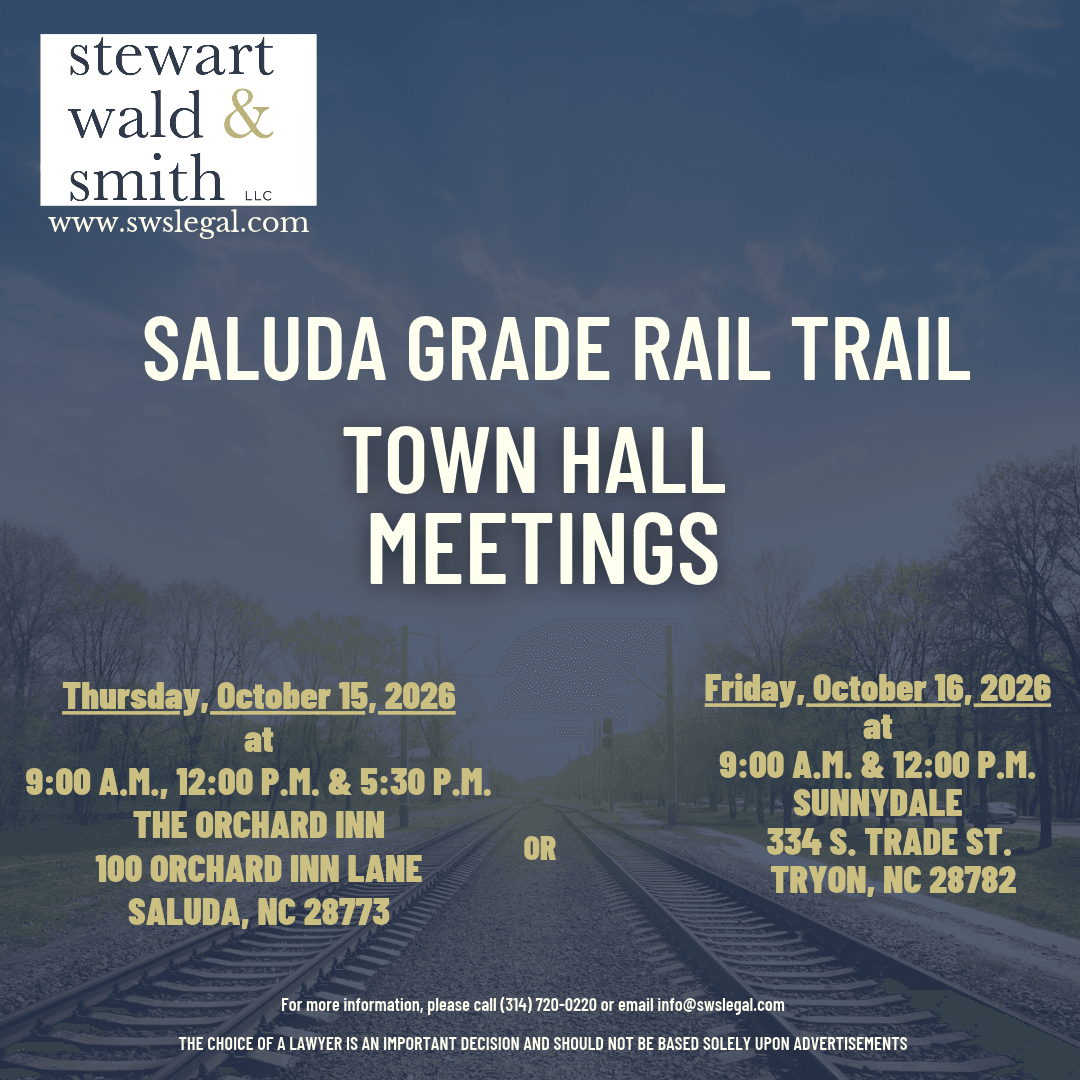
Founding Partner, Steven Wald, will be in the area near the planned Saluda Grade Rail Trail in October to host meetings for landowners. We hope to be able to have personal conversations about each landowner’s property and answer questions.
A compensation claim is against the federal government. It does not require a landowner to oppose the Saluda Grade Trail or the organizations developing it.
If you own land along the Saluda Grade corridor and have questions about your property rights, contact Stewart, Wald & Smith at 314-720-0220 to discuss your property.
The outcome of any claim depends on the facts and legal interests associated with the individual property.